

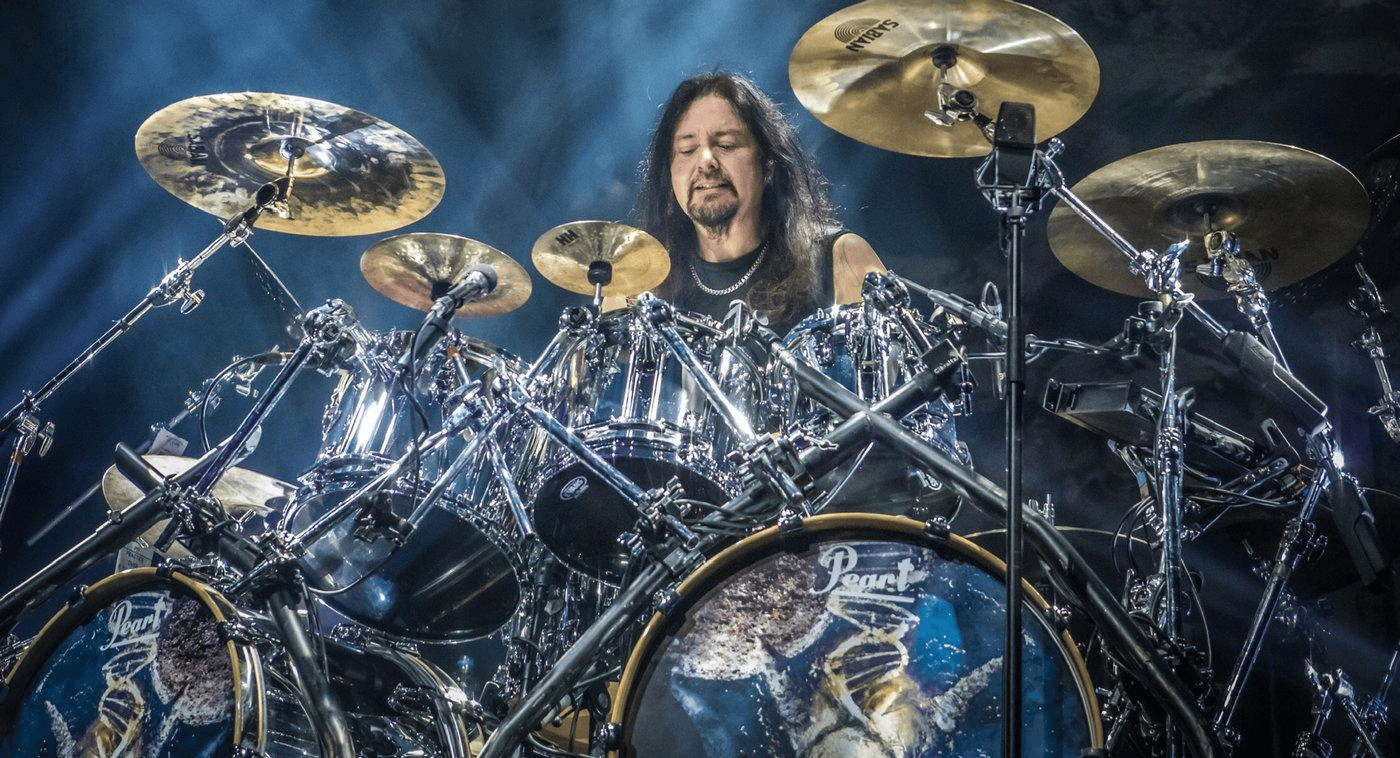
There aren’t too many musicians who can lay claim to having helped shape the sound of extreme metal across multiple generations, but Gene Hoglan is certainly one of them. From the ferocious thrash of Dark Angel and the technical evolution of Death through to his work with Strapping Young Lad, Testament and Dethklok, the man affectionately known as The Atomic Clock has built one hell of a musical legacy. Now he’s preparing to bring two significant chapters of that history to Australia in January 2027, performing with both Death To All and Dark Angel on the appropriately titled Death And Darkness Down Under tour.
Having caught Gene behind the kit with Dethklok on their previous Australian visit, I already had a pretty good idea of the musical punishment this bloke can deliver. But two bands in one night, with Death’s incredible catalogue alongside the relentless aggression of Dark Angel? That’s a different beast entirely. When I caught up with Gene for Crannk, he’d just returned from performing at Louder Than Life with Dethklok and was already looking ahead to what he promised would be an unforgettable run of Australian shows.
“The double bill, the double duty, the double bass, and the double drumming, holy moly,” Gene laughed, before offering perhaps the most Gene Hoglan invitation imaginable: “Come watch a drummer kill himself every night. It’s gonna be awesome.”
Beyond the excitement of the upcoming tour, our conversation took us back to the earliest days of the underground metal scene, when friendships were forged through handwritten letters and cassette tapes. We explored his relationship with Chuck Schuldiner, the recording of Individual Thought Patterns, the enduring connection he shares with Steve DiGiorgio, and the creative partnership with Jim Durkin that helped turn Dark Angel into one of thrash metal’s most uncompromising bands.
From Cassette Trading to Chuck Schuldiner
Long before Gene and Chuck Schuldiner would record together, the two musicians were already part of an underground network that helped lay the foundations for the extreme metal we know today. There were no streaming platforms, social media campaigns or instant downloads. If you wanted people to hear your music, you recorded it, copied it onto cassette and sent it to someone who shared your obsession with the heavier end of music.
Gene remembers those early connections with Chuck reaching right back to the Mantas days, before Death had even established itself under the name that would become so influential.
“Chuck and I went back to the Mantas days, you know, the tape trading. You had just this list of guys you were sending tapes to, and you’re getting tapes from, and these were all cassettes.”
As Gene explained, some of the material circulating wasn’t even what you’d call a proper demo. Bands were recording rehearsals with whatever equipment they could get their hands on, sometimes simply placing a ghetto blaster in the corner of the room and hoping it captured enough of the chaos.
He recalled receiving an early Exodus rehearsal tape where Paul Baloff could be heard yelling into the recorder because the band didn’t even have a PA. To Gene, those gloriously rough recordings were part of the magic of the underground.
Chuck eventually sent Gene some of his own material, possibly even recordings that predated Mantas’ Death by Metal demo. The pair struck up a friendship through their shared enthusiasm for heavy music, exchanging letters and discussing the bands they were discovering alongside what was happening with their own projects.
Their first face-to-face meeting finally came in late 1986, when Dark Angel performed an album-release show for Darkness Descends at the Whisky in Los Angeles. Producer Randy Burns, who had worked with Dark Angel and was also producing Death’s Scream Bloody Gore, brought Chuck and drummer Chris Reifert along to the show.
“You know, it was cool to finally meet Chuck,” Gene recalled. “Hey man, we’ve shared a number of letters together kind of thing.”
It’s a wonderful reminder of just how closely connected those early scenes were. Two young musicians sharing rehearsal tapes and discussing their favourite bands would eventually find themselves creating some of the most significant music in Death’s catalogue.
Individual Thought Patterns and the Rhythm Section of the Apocalypse
When the conversation turned to Individual Thought Patterns, I wanted to explore the incredible relationship between Gene’s drumming and Steve DiGiorgio’s bass playing. It’s one of those records where there’s an enormous amount happening musically, yet everything somehow locks together beautifully.
What Gene revealed was that the partnership came together much later in the recording process than many listeners might imagine.
Steve had previously recorded on Death’s Human, but Scott Carino had been performing bass duties during that era. With the recording of Individual Thought Patterns approaching, Gene recalled that Chuck decided Carino would not be involved and informed him that Steve was returning.
“Chuck came and told me, ‘Hey, we got Stevie D coming in.’ I’m like, awesome. I love Stevie D.”
The pair already knew each other through the underground metal scene, with Gene remembering Sadus as something of a younger brother band to Dark Angel. Their friendship was already established, but the recording sessions would take their musical relationship to another level.
According to Gene, the entire album came together in approximately three weeks, with Steve arriving while the recording process was already underway. To give him a chance to become familiar with the complicated arrangements, Steve was sent home with a cassette containing Gene’s recorded drum parts.
“Steve was able to take what I tracked on the drums, take that home, and really hone in on everything I’m doing. And that’s why, that’s when we became the rhythm section of the apocalypse.”
Gene also revealed that the pair initially had a slightly less intimidating nickname for themselves.
“We called ourselves the Laurel and Hardy Rhythm Section,” he laughed, explaining that Steve was the skinny one while Gene was considerably larger. He reckons they’ve switched positions a little over the years.
What began as musical chemistry during those recording sessions eventually became something far deeper. More than three decades later, the pair are once again sharing the stage through Death To All, and Gene made it clear just how important that relationship remains.
“That’s where our musical relationship began, then our familial brotherhood began then as well. Steve is my brother. Absolutely. He is my family.”
There’s something pretty special about that, especially considering how many bands both musicians have been involved with over the years. The connection that began in the studio during one of Death’s most technically demanding albums continues to form part of the foundation of Death To All today.
Death To All: Music That Still Brings Fans to Tears

Death To All is more than an opportunity to revisit an extraordinary catalogue of music. For Gene, the project has become a meaningful extension of Chuck Schuldiner’s legacy, bringing together fans who experienced Death during the band’s original lifetime and younger generations discovering that music for the first time.
With Gene joined by Steve DiGiorgio, Bobby Koelble and Max Phelps, the band represents multiple chapters of Death’s musical evolution. Their upcoming Australian tour promises material from all seven studio albums, covering everything from the raw brutality of Scream Bloody Gore through to the progressive compositions of The Sound of Perseverance.
When I asked Gene what the project had come to mean to him personally, he spoke about the emotional response that Death To All performances regularly bring out in audiences.
“It’s been a wonderful and very heartening extension of Chuck’s legacy, and the musical legacy of Death, which we were all an important part of.”
While younger fans are discovering the music through these performances, Gene explained that older metalheads are often experiencing something very different. For some, it’s the chance to hear songs they haven’t witnessed live since the early nineties. For others, it’s an opportunity to reconnect with a period of their lives that remains deeply connected to Chuck’s music.
“There are so many of the older generation, like me, I’m 59 years old. There’s a lot of guys who are older than me that are at the shows. They got tears running down their face, because this brings back such memories for them.”
Gene admits that even he doesn’t entirely understand why the performances create such powerful emotional reactions, but he has witnessed it repeatedly.
“This band brings out emotions in people that are probably not expected. I have no explanation for why that is, but it just does. It just happens.”
For Australian fans, the January shows will be the first opportunity to experience Death To All on our shores. It’s a significant occasion for anyone who grew up with those records or discovered Chuck’s music long after his passing.
Forty Years of Darkness Descends: Apparently, They Were Too Fast

Of course, you can’t sit down with Gene Hoglan and talk about the history of extreme metal without getting into Dark Angel.
With 2026 marking the 40th anniversary of Darkness Descends, I couldn’t resist mentioning that I’d been spinning the record at 6:30 that morning with a black coffee. Four decades later, the album still delivers the kind of relentless musical assault that makes you wonder how the hell a group of young musicians created something quite so ferocious.
I asked Gene whether Dark Angel had consciously set out to push the boundaries of thrash metal or whether they were simply trying to make the heaviest music they possibly could.
“That was it. I mean, there was no plan.”
Gene explained that when the band’s debut, We Have Arrived, was recorded, he wasn’t officially a member, although he had been present during the sessions and had contributed some lyrics. At that stage, the individual musicians had different ideas about where Dark Angel should head musically.
Jim Durkin, however, had a vision that immediately connected with Gene’s own musical instincts.
“Jim and I, we had the instant partnership of being two heavy dudes. Jim wanted to take Dark Angel, he just wanted to go heavier with it.”
Gene pointed to songs such as “Perish in Flames” and “The Burning of Sodom” as examples of the increasingly aggressive direction that attracted him to the band.
When he and Jim finally began working together, their shared desire to push Dark Angel into heavier territory became central to the sound of Darkness Descends. What followed was one of the most ferocious recordings of that era, although Gene revealed that the musicians were initially playing some of the material even faster.
“We actually had to slow down Darkness Descends. We had to slow it down in the studio because we were just too fast.”
He laughed that he would happily accept some of the blame for that, reflecting on the extraordinary energy he brought to the drums during those early sessions.
Despite the record’s reputation and the influence it has had on subsequent generations of extreme metal musicians, Gene insists they weren’t thinking about creating something that would still be celebrated forty years later.
“We were just trying to make a cool record. That was really it. We had no idea that this style of music would even be around.”
Looking at the continued activity of bands including Exodus, Overkill, Death Angel and Dark Angel, Gene considers himself fortunate to have been part of a musical movement that has endured far beyond anything its early participants could have imagined.
Extinction Level Event: Jim Durkin’s Legacy and the Future of Dark Angel
Dark Angel finally returned in September 2025 with Extinction Level Event, their first studio album in 34 years. It’s a record that carries considerable history, not least because its opening title track was written by founding guitarist Jim Durkin, who passed away in March 2023.
For Gene, discussing Jim’s influence was about much more than simply remembering a former bandmate. Their musical partnership helped shape the way he approached composition, guitar playing and the sound of Dark Angel itself.
“He was my first guitar hero. He was my first real writing partner at the time.”
Gene explained that the two had worked on material together before the pandemic, although circumstances eventually made it difficult to continue collaborating regularly. As Gene carried on developing songs, he would send material to Jim, while Laura Christine also became an important contributor to the album’s guitar writing.
The title track itself dates back to the period when Dark Angel began returning to the stage around 2014. Jim played Gene a song he’d been working on, wondering whether it might be suitable for the band.
Gene’s reaction was immediate.
“I heard it, and I was like, holy moly, yes, that is a Dark Angel song. Absolutely.”
Choosing it to open Extinction Level Event was a deliberate decision, both as a tribute to Jim and because the composition captured so much of what the band had always represented.
“It’s a homage to Jim. It’s also one of the more Dark Angel-sounding songs on the album. It’s fast, and it’s brutal, and it’s riffy.”
Gene also spoke enthusiastically about Laura Christine’s contribution, explaining that her riffs became an essential part of completing the material. Rather than sitting down for formal songwriting sessions, she would often provide an idea when Gene needed something to complete a particular section.
“She would toss out a riff at me when she knows I’m needing a riff here,” Gene explained, recalling those moments when the right guitar part suddenly made everything fall into place.
He was particularly generous in acknowledging her musicianship, describing some of her contributions as among the strongest riffs on the album. He also revealed that he’s looking forward to being able to collaborate with her more extensively when the band begins developing its next record.
It’s an interesting creative evolution for Dark Angel. Jim’s influence remains present throughout Extinction Level Event, but Laura’s playing has also helped establish a new chapter in the band’s musical identity, while Gene continues contributing the writing and drumming that have been central to its sound for decades.
Something Is Coming for Dark Angel
Just as our conversation was approaching its conclusion, Gene offered another interesting development. While discussing the future of Dark Angel, he revealed that the band has significant news in the works that he hopes to share before the Australian tour.
“Dark Angel has some very, very, very exciting news that we’re going to be able to share with people sometime in the very near future.”
He wasn’t able to reveal exactly what the announcement would involve, explaining that things were still being finalised, but his enthusiasm was impossible to miss.
Gene also acknowledged that the band had experienced a challenging year, expressing relief that they were moving beyond many of those difficulties and looking ahead with renewed momentum.
“A lot of great things are happening for Dark Angel right now. This has been a very trying year for the band, and now we are to the point where we’re past a lot of those trials.”
How did he describe the band’s current direction?
A jet-powered tank.
Not a bad way to finish a conversation with one of metal’s most relentlessly powerful drummers.
Death and Darkness Down Under — January 2027

Death To All and Dark Angel will bring their Death And Darkness Down Under tour to Australia in January 2027, with Gene Hoglan performing with both bands across four massive shows.
For Death To All, these performances represent the project’s first visit to Australia, with a legacy set celebrating Chuck Schuldiner’s extraordinary body of work. Dark Angel will also be bringing the music of Extinction Level Event to Australian audiences alongside material from their extensive thrash metal catalogue.
The tour kicks off in Brisbane at The Triffid on January 26, followed by Sydney’s Manning Bar on January 28 and The Croxton in Melbourne on January 29, before wrapping up in Adelaide at Froth & Fury Festival on January 30.
If you’ve ever wanted to experience the music of Death performed by musicians who helped create it, or witness the relentless thrash assault of Dark Angel, this is one hell of an opportunity to do both.
And judging by Gene’s enthusiasm, he’s certainly planning to make every single one of those nights count.
Watch my full conversation with Gene Hoglan below, where we discuss the early underground metal scene, his friendship with Chuck Schuldiner, the recording of Individual Thought Patterns, forty years of Darkness Descends, Jim Durkin’s enduring influence and the future of Dark Angel.
DEATH TO ALL + DARK ANGEL — DEATH AND DARKNESS DOWN UNDER
Tuesday 26 January 2027 — The Triffid, Brisbane
Thursday 28 January 2027 — Manning Bar, Sydney
Friday 29 January 2027 — The Croxton, Melbourne
Saturday 30 January 2027 — Froth & Fury Festival, Adelaide
Tickets and further information: SWD Presents
**Froth And Fury Fest: **https://www.frothandfuryfest.com/

